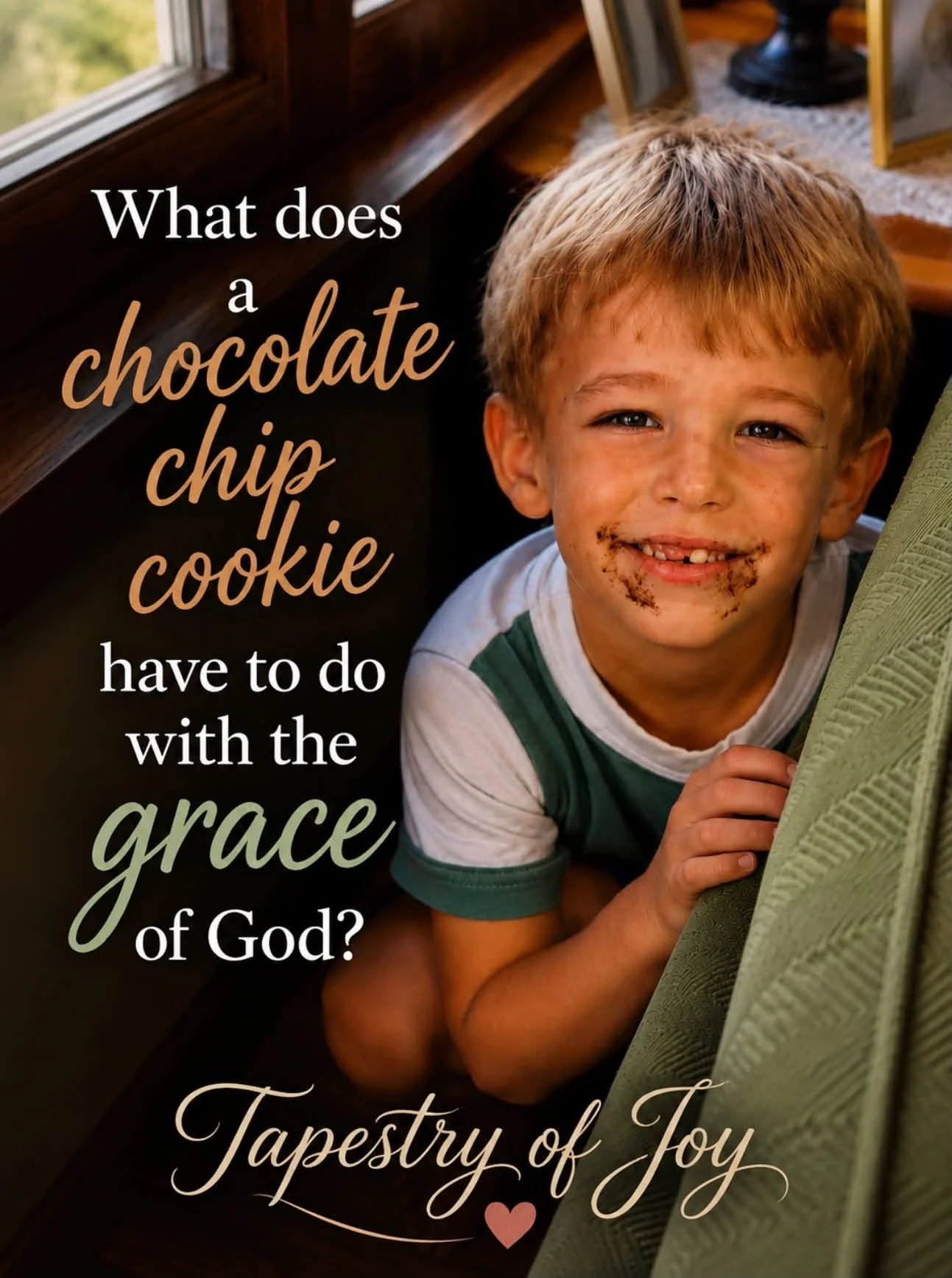
The Chocolate Chip Cookie
Throughout this series, we’ve talked about what grace and mercy look like in our relationship with our Heavenly Father—and how they should shape the way we treat our friends, our families, and the people around us. But there’s one area we haven’t talked about quite as much—and perhaps one of the most important: What do grace and mercy look like in our homes and churches when it comes to our children and grandchildren?
Because what we do—or don’t do—can affect them for years to come. Our children are watching how we respond when they make mistakes, make poor choices, hurt us, disappoint us, or even walk away from their faith. And sometimes, by God’s grace, they find their way back. When they do, what kind of reception will they receive from us? Will they find judgment and shame? Or will they find truth wrapped in grace, correction wrapped in love, and a door that is always open?
A child may forget a sermon, but they may never forget how we made them feel when they were hurting. What they experience from us can become part of the picture they carry of God.
And that brings me to a little story from many years ago involving my three-year-old son, Mike, a missing cookie—and enough chocolate evidence to convict him on the spot.
I had made a fresh batch of chocolate chip cookies. And if you’ve ever lived with a three-year-old, you already know the danger. Fresh cookies + three-year-old = trouble.
Mommy had given Mike one simple instruction: “You can have a cookie after we eat our meal.”
A little while later, one cookie was missing. I started looking around, and there he was—my little boy hiding behind the living room chair. Apparently, he had decided that if Mommy couldn’t see him, Mommy couldn’t see the cookie either.
I walked over and asked, “Mike, did you eat a cookie?”
Those big brown eyes looked up at me. He shook his head.
“No.”
Except there was just one little problem. The chocolate chips had apparently decided to testify against him. His mouth was covered in chocolate!
That little three-year-old was telling Mommy a fib—and he wasn’t exactly what you would call a criminal mastermind.
I had a choice in that moment. I could get angry. I could shame him. I could make the whole incident much bigger than one stolen cookie. Or I could use the moment to teach him.
Because discipline isn’t simply about punishment. Discipline is about teaching.
Mike needed to learn that obedience matters. He needed to learn that lying doesn’t make a wrong choice disappear. And he needed to understand that choices have consequences.
But there was something else he needed to know—something far more important: His mistake had not changed how much Mommy loved him.
And isn’t that what God does with us? God never calls our sin acceptable. He lovingly corrects us because He loves us too much to leave us where we are.
Mercy says, “You did wrong, but I won’t give you what you deserve.”
Grace says, “You did wrong, but I still love you, and I’m going to help you learn, grow, and move forward.”
That is the kind of discipline our children and grandchildren need from us. Not discipline driven by anger. Not correction designed to shame. But correction that teaches, consequences that have purpose, and love that never disappears.
They need to know that consequences are real—but so is forgiveness. Sometimes they simply need to hear: “You made a mistake, but you are still loved.”
And they need to know something else: the door is always open.
Someday, their mistakes may be much bigger than a missing chocolate-chip cookie. There may be choices that break our hearts. There may be seasons when they walk away from everything we taught them. There may be moments when we don’t understand their decisions.
And when those moments come, they will need truth. But they will also need grace. They will need to know that home is still home, that they are still loved, and that the door is always open.
Because we are weaving threads into the lives of our children and grandchildren every single day. Every correction. Every consequence. Every hug afterward. Every “I still love you.” Every time we choose patience instead of anger. Every time we choose grace instead of shame.
Those are threads.
Years from now, they may not remember every mistake they made. But they may remember how we loved them while we taught them.
And perhaps one of the greatest lessons we can teach our children about grace and mercy isn’t simply to tell them what they mean.
It’s to show them.
Because whether we realize it or not, our children are learning something about God by watching us.
So don’t underestimate the thread you’re holding today.
Someone is watching. Someone is learning. And someone may someday need to find their way home.
Think back to when you were a child. Who showed you grace or mercy when you had done something wrong and deserved punishment, but instead you received love, forgiveness, or compassion? I’d love to hear your story.
We’re coming full circle. Tomorrow, we’ll take one final look at grace in the beautiful tapestry God has been weaving through this series of devotions.
And I think you’ll see grace a little differently when we do.